Toilet cleaning is one of the most important and most misunderstood parts of professional cleaning. It's also one of the areas where poor practice can quietly create hygiene issues in homes and workplaces, without anyone ever realising it.
When we interview cleaners, especially those who've worked in the industry before, one of the first questions we ask is simple: how do you clean a toilet? Surprisingly often, the answer involves a single cloth wiped across the entire area bowl, seat, lid, flush button and surrounding surfaces, all in one go.

It might look efficient. But without a clear system in place, this approach doesn't create hygiene it creates cross-contamination. Which is exactly why toilet cleaning is something every client should feel confident asking their cleaner about.

The Problem with "One-Cloth" Cleaning

A toilet isn't one surface. It's a collection of zones, each with a different hygiene risk. When the same cloth moves across the whole area, contaminants from the higher-risk zones get transferred straight onto touch points like the seat, lid and flush button.
The result is a toilet that looks clean but isn't necessarily hygienically safe one of the most common issues we see when cleaning happens without structure or proper training behind it.

Why Toilet Cleaning Must Follow a System

Professional cleaning was never about speed or shortcuts. It's about consistency and method.

A proper system ensures:

The same standard is achieved every time, no matter who's doing the cleaning
Hygiene is prioritised over appearance

Without a system, quality depends entirely on whichever cleaner happens to be there that day and that's not something a client should have to gamble on.

What a Proper Toilet Cleaning Process Looks Like

A professional clean follows a deliberate order, with a clear separation of tasks.

Why We Use Toilet Paper for the Bowl

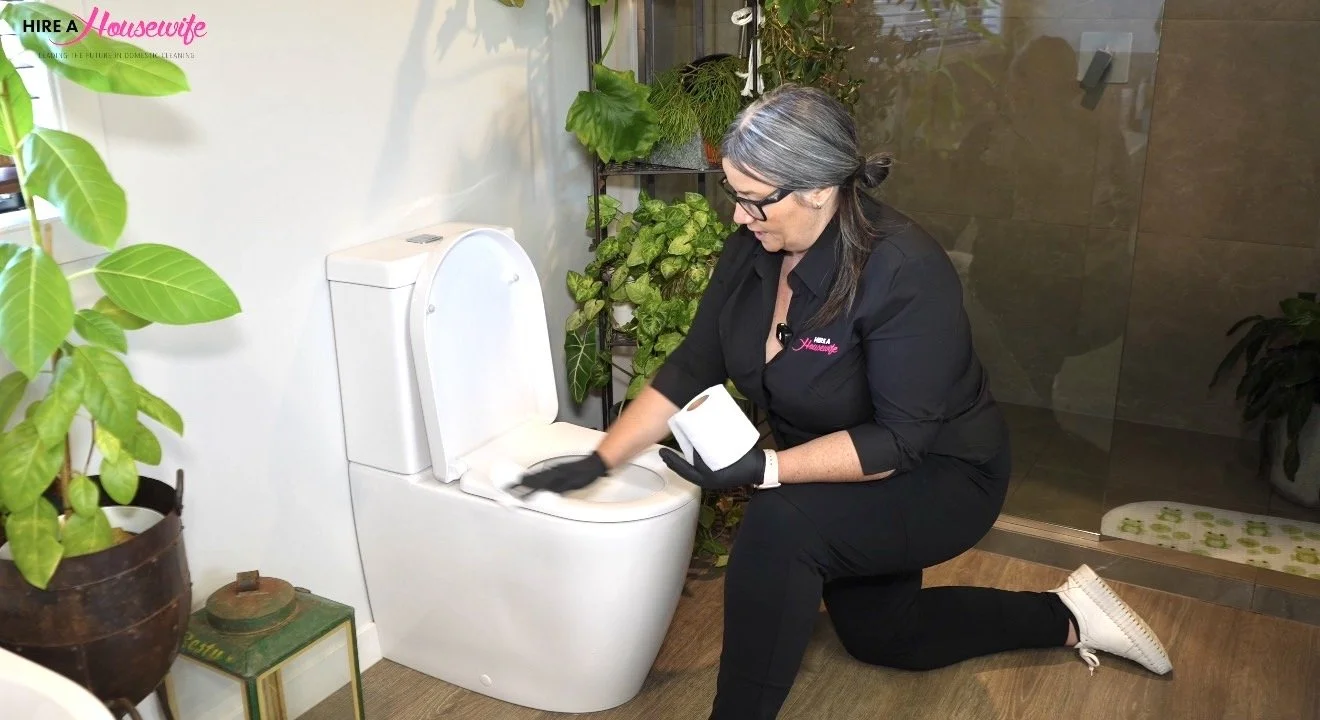
As part of our system, we clean the bowl with toilet paper rather than a reusable cloth. It's a deliberate hygiene choice.

Toilet paper is single-use and disposed of immediately, removing any risk of contaminants transferring elsewhere and removing any chance of a cloth being accidentally reused where it shouldn't be. Cloths are reserved strictly for other bathroom surfaces, clearly designated and managed within our system. This separation of tools is one of the simplest, most effective ways to prevent cross-contamination and protect proper hygiene standards.

Why Systems Protect Clients

When a cleaning company has strong systems in place, clients get

Consistent results, every visit
Higher hygiene standards, even in the places you can't see
Trained staff following the same process every time
Real quality control and accountability

Without systems, standards drift, shortcuts creep in, and hygiene can be compromised often without anyone noticing until it's a problem.

 A Question Every Client Should Ask

One of the most useful questions you can ask your cleaner is this: "Can you explain how you clean toilets, and how you prevent cross-contamination?"

A professional cleaner should be able to answer clearly and confidently. If the answer is vague or rushed, it might be worth reconsidering who you trust with your cleaning.

Cleaning Is About Health, Not Just Appearance

Toilets are one of the most critical areas in any cleaning routine. They need structure, training and a clear system to be properly clean not just made to look clean.

Anyone can wipe a toilet. Our cleaners follow a system that protects hygiene, health, and peace of mind.

Choosing a cleaning company with proven processes means choosing consistency, and cleaning done right.