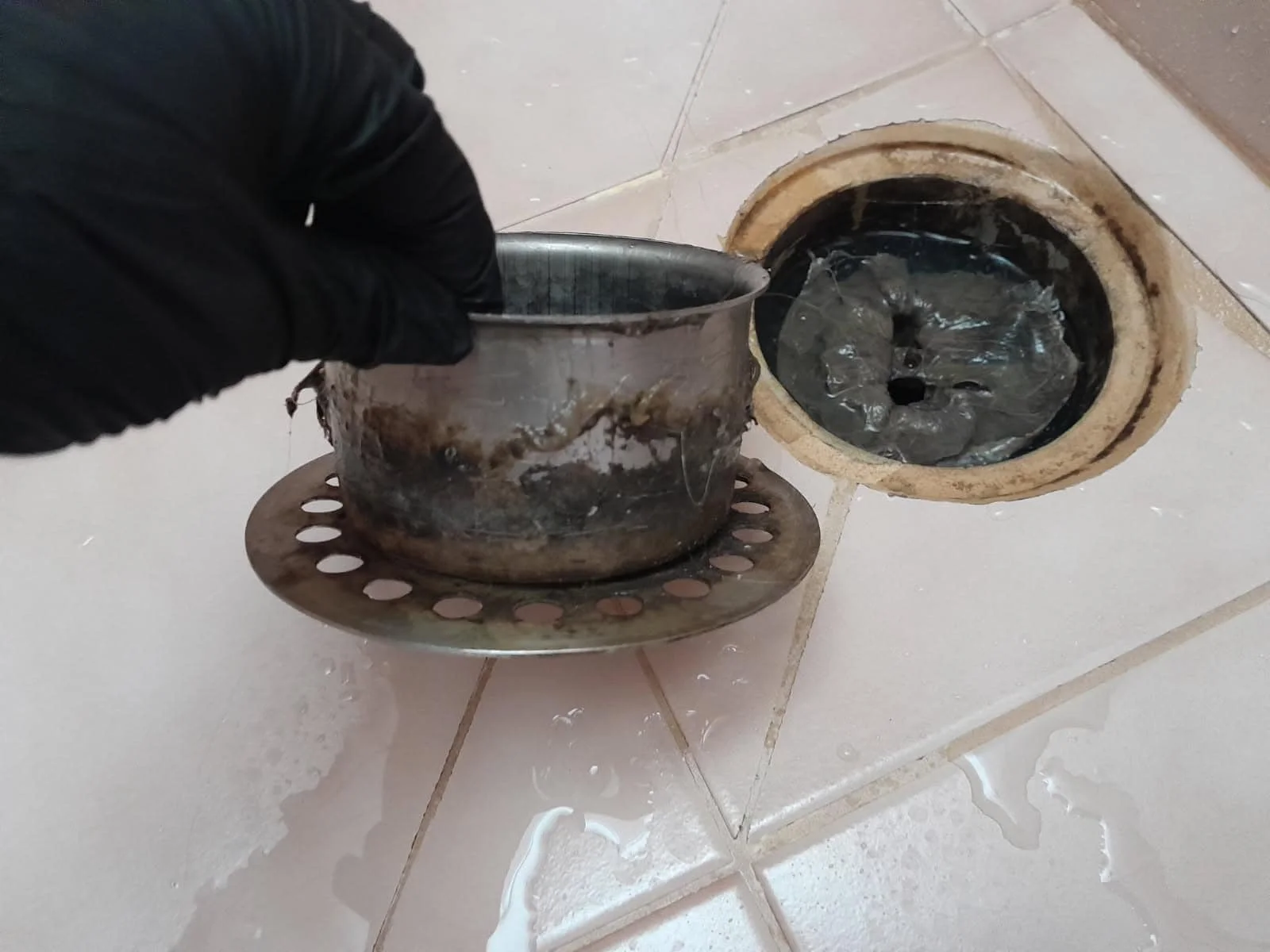
The Bathroom Sump. The Floor Drain Almost No One Cleans

Most bathrooms have one a small drain set into the floor, usually somewhere near the shower, often called a sump or floor waste. It's there to handle overflow and drainage, and because it sits low, out of the way and out of sight it's one of the most consistently skipped spots in the whole bathroom.

Unlike the basin or the toilet, nobody's looking at the sump every day. That's exactly why it needs to be part of a proper cleaning system rather than something that only gets attention when there's already a problem.

The Problem with Ignoring the Sump

A sump collects far more than water. Hair, soap scum, skin cells and general grime all wash toward it and settle in and around the grate, often building up well below what's visible from a quick glance. Left alone, that build-up doesn't just sit there quietly it becomes a breeding ground for bacteria and mould, and very often the real source of a bathroom odour that gets blamed on everything except the actual cause.

Because it's a low, out-of-the-way fixture, it's also one of the easiest spots to genuinely forget during a regular clean not from carelessness, but simply because it's not part of the obvious visual checklist most people run through.

Why Sump Cleaning Must Follow a System

Professional cleaning treats every fixture on its own merits, including the ones that are easy to overlook.

A proper system ensures

The sump is checked and cleaned every visit, not just when there's a smell or a blockage
Build-up is actually removed from in and around the grate, not just rinsed further down
The right tool is used, rather than whatever cloth happens to be in hand

Without a system, the sump is exactly the kind of spot that can go weeks or months without proper attention, quietly building up the whole time.

What a Proper Sump Cleaning Process Looks Like

A professional clean treats the sump as its own step. The grate is lifted or opened where possible, and visible hair and debris are removed by hand rather than pushed further into the drain. A dedicated brush or tool kept separate from cloths used elsewhere in the bathroom is used to work through build-up around the grate and the inside rim. An appropriate product is given time to break down residue and any early mould growth, and the area is properly rinsed once it's actually clean, not just once it looks clear.

As with plugholes and drains elsewhere in the bathroom, keeping a dedicated tool for the sump matters. It's a higher-risk zone for bacteria and mould, and using the same cloth here as on the basin or shower tiles undoes the hygiene benefit of cleaning either one properly.

Why Systems Protect Clients

When a cleaning company works to a proper system, clients get

A bathroom that's genuinely clean in the spots that are easy to forget, not just the ones that are easy to see
Fewer blockages and less odour, because build-up doesn't get the chance to sit and accumulate
Consistent attention to fixtures that don't get checked in a casual wipe-down
Real accountability, rather than results that depend on what happened to be noticed that day

A Question Every Client Should Ask

It's worth asking: "Is the bathroom sump or floor waste included as a standard part of your clean?"

A professional cleaner should be able to answer clearly, and it should already be part of their process. If it's never mentioned, there's a good chance it's never been cleaned.

Cleaning Is About Health, Not Just Appearance

The parts of a bathroom that are lowest, smallest and easiest to forget are often the parts doing the most to affect hygiene and odour. A sump that's actually clean not just rinsed is one more small detail that adds up to a genuinely healthy bathroom.

Anyone can wipe a basin. Our cleaners follow a system that covers the spots most people don't even know to look for.